Premessa

Con il presente Blog non intendo voler insegnare a nessuno come si cucina, anche perchè non mi ritengo assolutamente all'altezza di insegnare qualcosa a qualcuno.
Il mio intento è quello di presentare i piatti che faccio e descriverne la preparazione (con tantissi errori di forma ^_^).

10/10/2012
aggiungo ulteriori descrizioni alle mie ricette, tempi, difficoltà e quello che mi viene in mente...

Pertanto... " CHIACCHIERIAMO MENO E CUCINAMO DI PIU' "

venerdì 3 febbraio 2012

Sfilatino Ripieno ( Panino Ripieno)

Era da tanto tempo che volevo pubblicare questa ricetta, ma non trovavo mai l'occasione per farla.
L'occasione di fatto c'è stata e ve la presento...

Ingredienti : uno sfilatino, 250g di bietola (bieta), 2 uova, 2 salsicce, 50g di prosciutto cotto, un bicchiere di latte,  qualche spicchio di aglio, olio di oliva extravergine, del pan grattato, sale e pepe.

Prendiamo le 2 salsicce, spelliamole e stracciamole a bocconcini piccoli, prendiamo l'aglio, un paio di spicchi non troppo grossi e tritiamoli finemente quasi ad ottenere una purea, scaldiamo in una padella dell'olio (un C, tanto per oliare la padella) e saltiamo assieme la salsiccia, l'aglio e la bietola anch'essa precedentemente tagliata grossolanamente, saliamo e pepiamo QB.

Il composto sarà pronto quando il liquido che si sarà formato sarà quasi del tutto ritirato, togliamo il tutto dalla padella e mettiamolo in una ciotola a raffreddare, abbiamo ottenuto il composto per il ripieno.

Prendiamo lo sfilatino, tagliamo via un lato e con l'ausilio di un coltello lungo cominceremo a svuotarlo, la mollica ( a casa mia si chiama midolla) la metteremo a bagno nel latte e quando sarà ben imbevuta con una forchetta la schiacceremo e la uniremo al composto per il ripieno.

Sbattiamo le uova come per fare una frittata, aggiungiamo un pizzico di sale e il pepe e uniamo al composto per il ripieno impastiamo bene e ... si comincia a riempire il nostro sfilatino una volta riempito bene lo richiudiamo con il pezzetto precedentemente tagliato ( chiamato anche Culaccino).

In una teglia mettiamo della carta di alluminio adagiamoci sopra lo sfilatino cospargendolo con un filo di olio e del pan grattato, chiudiamoli nell'allumino e mettiamolo in forno ventilato per circa 30-40 min. a 120 °C poi apriamo la stagnola e facciamo prendere una leggere doratura al pan grattato.

Affettiamo il tutto e serviamo caldo BUON APPETITO...

giovedì 2 febbraio 2012

I Migliaccini "frittelle di pasta"

I migliaccini sono un piatto di recuperare la pestella che avanza.

Facciamo la pastella e gli ingredienti sono farina 00, acqua, sale e lievito (meglio in polvere).

Facciamo un impasto che riesca a essere non troppo liquido ma che quando togliamo la frusta faccia una sorta di nastrino... 

Lasciamo riposare il composto per circa 30-40 minuti, intanto prendiamo una padella abbastanza capiente e mettiamo un buon fondo di olio di arachidi, portiamo l'olio ad ebollizione e con l'ausilio di un cucchiaio da minestra versiamo il composto creando tante frittelle... La doratura deve essere abbastanza decisa (scura) per avere la certezza che anche l'interno sia ben cotto.

ORA TOCCA A VOI PROVARE BUON APPETITO...

I have a plate of migliaccini recover the pestle moving forward.

Let the batter and ingredients are 00 flour, water, salt and baking powder (preferably powder).

We do a mix that manages to be not too thin but that when we remove the whip makes a sort of ribbon ...

Let the mixture rest for about 30-40 minutes, while we take a pan large enough and put a good fund of peanut oil, the oil we bring to the boil and using a soup spoon pour the mixture creating so many pancakes. .. The gold must be quite strong (dark) to make sure that the inside is well cooked.

NOW IT IS UP TO YOU TO TRY ... ENJOY

Le coccole "di pasta per pizza"

 Le coccole non intese come dolci effusioni ma in riferimento alle bacche che si trovano in natura (io ci vedo quelle del cipresso).

La preparazione è semplicissima preparate l'impasto per la pizza.

Ingredienti per circa 4 persone: 250 g farina 0, mezza bustina di lievito per pizza o  mezzo cubetto, una puntina di zucchero e un pizzico di sale, un bicchiere di acqua, olio di semi di arachidi, per fare una versione aromatizzata ho usato una bustina di zafferano.

Prepariamo l'impasto e facciamolo lievitare l'impasto per circa 3-4 ore poi prendiamolo e su una teglia da forno facciamo tante palline poco più piccole di una noce e facciamo nuovamente lievitare la pasta per circa un ora anche un ora e mezza.

In un pentolino abbastanza capiente mettiamo l'olio a scaldare e portato a temperatura cominciamo a friggere le palline formate, raggiunta la giusta doratura mettiamoli ad asciugare su della carta assorbente, saliamoli ancora ben caldi.

Possono essere serviti sia caldi ( meglio ) che freddi...

ORA NON VI RESTA CHE PROVARE BUON APPETITO

The pampering does not meant as effusions but in reference to the sweet berries that are found in nature (the ones I see in Cypress).
The preparation is simple prepare the dough for the pizza.
Ingredients for 4 people: 250 g 0 flour, half a packet of yeast for pizza or half a cube, a pinch of sugar and a pinch of salt, a glass of water, oil seeds, peanuts, flavored to make a version I used a sachet of saffron.
We prepare the dough and let us do the dough rise for about 3-4 hours Take it and then on a baking sheet so many balls do little smaller than a walnut and make the dough rise againfor about an hour and a half now.
In a saucepan large enough to heat the oil we brought to room temperature and begin tofry the balls formed, reaching the gilding just put them out to dry on paper towels, salt themstill piping hot.
They can be served either hot (better) and cold ...
NOW THERE IS PROOF THAT GOOD APPETITE

mercoledì 4 gennaio 2012

Biscotti Croccantosi

Salve e Buon anno a tutti, in occasione delle feste come sempre si abusa di mangiare e sopratutto di dolci, pertanto perché non cimentarmi anche io in qualche dolcetto.
Fare le cose semplici è bello ma cercare di fare qualcosa di alternativo lo è di più...

Ingredienti:
300g di farina di riso, 250g farina di grano saraceno, 180g di zucchero semolato, il succo e la buccia grattata di un arancia, 180g burro, 4 uova e una bustina di lievito per dolci.

Unite le farine ben setacciate, lo zucchero, il lievito, la buccia e il succo d'arancia e le uova, mescolate il tutto e aggiungete il burro a temperatura ambiente lavorate fino a ottenere un impasto elastico ( se fosse troppo duro potete aggiungere del latte).

Scaldate il forno a 180° raggiunta la temperatura infornate l'impasto con la forma che più vi aggrada e cuocete per circa 20-25 minuti.

Sfornate e Buon Appetito.....


Hello and Happy New Year to all, during the festivities, as always, and especially the abuse of eating sweets, so why do not I also try my hand at some candy.
Making things simple is nice but try to do something different it's more ...

ingredients:
300g rice flour, buckwheat flour 250g, 180g caster sugar, the juice and grated peel of an orange, 180g butter, 4 eggs and a packet of baking powder.

Add the sieved flour, sugar, baking powder, zest and orange juice and eggs, mix well and add the butter at room temperature until the dough is processed rubber band (if it's too hard you can add milk ).

Preheat oven to 180 ° bake the dough temperature reached with the form that best suits you and cook for about 20-25 minutes.

Enjoy your meal and baked .....

domenica 23 ottobre 2011

Panini di sfoglia ripieni

Questa ricetta può essere usata per presentare un antipasto che un secondo piatto a seconda delle dimensioni con cui si fanno i panini.

Ingredienti per 4 persone : 
- Pasta sfoglia circa 250g. (una confezione va bene)
- 2 fettine di maiale.
- 2\3 pomodori.
- dell'insalata (il tipo a piacere).
- una cipolla bianca.
- sale, olio, pepe, coriandolo e curcuma.   

Per prima cosa andiamo ad affettare il pomodoro a rondelline e lo riponiamo in una ciotola, affettiamo finemente l'insalata e anch'essa la metteremo in una ciotola con un po' d'acqua per evitare che il taglio annerisca.

Riscaldiamo il forno a 180° e prepariamo delle porzioni di pasta di circa 10x5 cm che inforneremo per circa 20-25 minuti o perlomeno fino ad ottenere la doratura voluta.

Ora prepariamo la cipolla affettandola finemente ( io l'ho passata al mixer per avere una crema) e la carne tagliata a striscioline, saltiamo il tutto con l'olio per circa 5 min. poi aggiungiamo le spezie, il sale lo aggiungiamo alla fine.

Con un coltello liscio apriamo i panini che saranno belli croccanti usando la massima delicatezza, farciamo con la carne, l'insalata e il pomodoro condendo con un po' di olio d'oliva e serviamo caldi.

questo è quanto buon appetito.


This recipe can be used to present an appetizer than a main dish, depending on the size you make the sandwiches.

Ingredients for 4 people:
- About 250g puff pastry. (a box is fine)
- 2 slices of pork.
- 2 \ 3 tomatoes.
- Salad (the kind you like).
- A white onion.
- Salt, oil, pepper, coriander and turmeric.

First, let's slice the tomato rondelline and we put in a bowl, finely sliced ​​lettuce and also toput in a bowl with a little 'of water to avoid cutting tarnish.

Preheat the oven to 180 degrees and prepare portions of dough about 10x5 cm and bake for 20-25 minutes or at least until you get the desired browning.

Now prepare the onion finely chopped (I've gone to have a mixer to cream) and the meat cut into strips, and jumping over everything with the oil for about 5 min. Then add the spices, the salt we add at the end.

With a straight blade knife open sandwiches that will be using the most beautiful crunchydelicacy, stuffed with meat, lettuce and tomato with a little seasoning 'of olive oil and servehot.

this is how good appetite.

mercoledì 21 settembre 2011

Ravioloni al Popone

Ammetto di pubblicare questa ricetta troppo in ritardo per poter trovare un buon popone, ma la posto lo stesso così che quando sarà di nuovo stagione possa essere riprodotta.

Ingredienti per 4 persone :
200g di farina
2 uova
3 spicchi di popone
Pecorino a scaglie (circa 100g)


Prosciutto a fette sottili (circa 150g)
Olio d'oliva un cucchiaino da caffè
Burro due noci (circa 10-15 g)
1/2 bicchiere di panna fresca
Sale e pepe

Per prima cosa prepariamo la pasta per fare i ravioli unendo la farina con le uova e un pizzico di sale, impastato bene il tutto e fatta una pallina ben elastica avvolgerla nella pellicola e riporla in frigo per circa 30 minuti.

Mentre facciamo riposare la pasta tritiamo a coltello le fettine di prosciutto e uniamole in una terrina al pecorino e ad un pizzico di pepe per far insaporire il tutto.

Ora prendiamo la pasta e facciamo una sfoglia alta circa 0.5 mm (se non si vuol fare a mano usiamo la nonna papera che viene bene lo stesso ed è più veloce), con l'ausilio di un coppa-pasta o di un bicchiere prepariamo i dischi per i raviolo (circa 9-10 cm di diametro "mi piacciono le dimensioni abbondanti") che andremo a riempire con il trito di prosciutto e pecorino (con le dosi che ho riportato verranno almeno 3 raviolo a testa).

Mettiamo l'acqua a bollire e cominciamo a preparare il condimento, in una padella capiente mettiamo l'olio e il burro a scaldare, mentre aspettiamo che si raggiunga la temperatura riduciamo il popone a cubetti e buttiamolo in padella facendolo soffriggere. Cominciato a sfaldarsi aggiungiamo un pizzico di sale e il pepe e con un mestolo schiacciamo il popone e aggiungiamo la panna facciamo ritirare un poco e il condimento è fatto (se si hanno dei grumi possiamo passare il composto con il mixer per ottenere una sorta di vellutata).

Portata ad ebollizione l'acqua saliamola e mettiamo a cuocere i ravioli (circa 2 minuti) poi scoliamoli e versiamoli in padella con il composto, facciamoli saltare a fuoco alto per altri 2-3 minuti per far incorporare il condimento e serviamoli belli fumanti.

A questo punto buon appetito a tutti e alle prossime.


I admit to publish this recipe is too late to find a good melon, but the same place so that when the new season will be played.
Ingredients for 4 people:
200g flour
2 eggs
3 slices of melon
Flakes of pecorino cheese (about 100g)
Ham into thin slices (about 150g)
Olive oil a teaspoon
Butter two nuts (about 10-15 g)
1 / 2 cup fresh cream
Salt and pepper
First prepare the dough to make ravioli by combining the flour with the eggs and a pinch of salt, mixed well and made a ball elastic wrap well in plastic wrap and store in refrigerator for about 30 minutes.
While we make the dough with a knife slices of chopped ham and uniamole in a bowl with pecorino cheese and a pinch of pepper to spice it all.
Now take the dough and make a sheet about 0.5 mm high (if you do not want to do by hand we use the grandmother duck that is just as well and is faster), with the help of a cup of pasta or a glass-prepare the discs for ravioli (about 9-10 cm in diameter, "I like the size of abundant") we're going to fill with the chopped ham and cheese (with the doses that I will be reported at least 3 ravioli per person).
We put the water to boil and begin to prepare the dressing, in a large frying pan put oil and butter to boil, while we wait for it to reach room temperature to reduce the melon cubes and throw him in a pan fry making. Began to fall apart add a pinch of salt and pepper and crush the melon with a spoon and add the cream we withdraw a little and the sauce is done (if you have lumps we can pass the mixture with the mixer to obtain a sort of velvety ).
Saliamola boiled water and put to cook the ravioli (about 2 minutes) and then scoliamoli versiamoli with the mixture in the pan, let them jump over high heat for 2-3 minutes to incorporate the seasoning and let us serve steaming beautiful.
At this point, good appetite at all and the next.

venerdì 12 agosto 2011

Paella Vegetariana "Improvvisata"


In questo periodo l'orto fornisce molti ortaggi che con un po' di fantasia si possono utilizzare per preparare pitti alternativi...

Con zucchine, pomodori, fagiolini ecc. chi più ne ha ne metta.

Per 4-6 persone:
4 pomodori san Marzano 
4 zucchine non troppo grosse
150g di ceci 
una cipolla grossa bianca 
100g di fagiolini 
2 bustine di zafferano 
400g di riso arboreo 
1L di brodo vegetale
3-4 spicchi di aglio
olio, sale e pepe Q.B.


Prendiamo una paellera per la Paella (che sostanzialmente è la stessa cosa), facciamo a cubetti le zucchine e la cipolla e mettiamola in una ciotola, priviamo i pomodori dei semi e della buccia scottandoli in acqua calda, mettiamo anche una pentola sul fuoco con a scaldare il brodo vegetale.
Mettiamo la paellera sul fuoco e ricopriamo il fondo con abbondante olio, appena è ben caldo aggiungiamo la cipolla e le zucchine e facciamole soffriggere per circa 5 minuti (a fuoco alto) poi aggiungiamo gli spicchi d'aglio schiacciati e i ceci, facciamo soffriggere il tutto ancora per altri 5 minuti dopo di che aggiungiamo i pomodori e il riso lavato abbondantemente per privarlo dell'amido.


Saliamo e pepiamo il tutto e dopo circa 10 minuti aggiungiamo il brodo ben caldo (circa 0,5l) fino a farlo ritirare (a fuoco medio andando a scuotere la padella di tanto in tanto).
Aggiungiamo ora i fagiolini e il restante brodo e facciamo ritirare il tutto.


 Finito di far ritirare il brodo spegniamo il fuoco e copriamo la paella con un canovaccio o con l'alluminio per circa 10 min poi potete servire..... e buon appetito.... consiglierei di abbinarci un vino rosato del Salento.
Cmq buon appetito.


During this period, the garden provides a lot of vegetables with a little 'fantasy can be used to prepare alternative Picts ...
With zucchini, tomatoes, beans etc.. so on and so forth.
For 4-6 people:
4 San Marzano tomatoes
4 courgettes not too big
150g chickpeas
a large white onion
100g green beans
2 sachets of saffron
400g of rice tree
1L vegetable stock
3-4 cloves of garlic
oil, salt and pepper Q.B.
Take a paellera for Paella (which is basically the same thing), we diced zucchini and onion and put it in a bowl, tomatoes deprive the seeds and peel blanch them in hot water, also put a pot on the fire to heat the vegetable broth.
We paellera on the fire and cover the bottom with plenty of oil, when it is hot add the onion and zucchini, and let's fry for about 5 minutes (high heat) then add the cloves of crushed garlic and chickpeas, fry everything we do again for another 5 minutes after we add the tomatoes and the rice thoroughly washed to deprive them of starch.
We climb pepiamo and everything and after about 10 minutes add the hot broth (about 0.5 l) until it is withdrawn (over medium heat going to shake the pan from time to time).
Let's add the remaining beans and broth and we collect everything.
  Done to remove the stock turn off the heat and cover the paella with a cloth or aluminum for about 10 minutes then you can serve ..... and enjoy your meal .... suggest to combine a rosé wine from Salento.
Cmq good appetite.

giovedì 30 giugno 2011

Marmellata di Popone VS Marmellata di Anguria

Rieccomi a scrivere degli esperimentti che faccio in cucina ( pensate la disperazione dei miei genitori che devono [notare la parola devono] provare poi i piatti che cucino...

Comunque non divaghiamo oggi sono a presentarvi due marmellate che non si trovano spesso in comercio o perlomeno non ne ho mai viste...

La stagione ci offre due frutti particolari perche difficili da associare alle marmellate, il popone che molti... anzi tutti associano al prosciutto e l'anguria.

Partiamo con la ricetta per fare la marmellata di popone.
800g di polpa di popone , 200 g di zucchero e una mela non troppo grossa o una bustina di peptina ( a mio avviso è meglio la mela)
Tagliamo a dadini la polpa di popone e mettiamola in una pentola capiente uniamo lo zucchero e la mela anchessa a dadini ( il torsolo è ogico toglierlo ma la buccia va tenuta perche contiene la peptina).
Facciamo riposare il tutto per 12 ore in frigo dopo di che facciamo bollire il tutto per circa 2 ore o fino a quando il composto non sarà addensato quanto basta.
Passiamo al passatutto il composto ottenuto e mettiamo nei barattoli per poi pastorizzarlo in pentola, dopo circa 10-12 giorni la nosta marmellata sarà pronta per essere consumata.

Per quanto riguarda l'anguria le dosi di zucchero sono 250g per chilo di polpa e una mela a chilo.
L'unica accorteza da usare è il considerare che oltre il 90% della polpa dell'anguria è costituita da acqua, pertanto per far ottenere una densità alla marmellata occorrerà bollirla molto per molto tempo. (per esperienza circa 1 ora a chilo di prodotto)

Penso di aver detto tutto ora stà a voli mettervi a i fornello e provare... fatemi sapere il risultato ciao ciao e buon appetito.

Here I am writing I do experiments in the kitchen (think of the despair of my parents who have [note the word must] then trying the dishes I cook ...
However, do not digress to introduce two jams today are not found often in Commercial or at least I've never seen ...
The season offers us two special because fruits are difficult to associate with jam, the melon that many ... (Indeed everyone associates with ham) and the watermelon.
Let's start with the recipe to make jam melon.
800g of melon pulp, 200 g of sugar and not too big an apple or a bag of peptina (I think the apple is better)
Diced melon pulp and put it in a large saucepan join the sugar and the diced apple anchessa (it is logical to remove the core, but must be taken because the skin contains the peptina).
Let it rest in refrigerator for 12 hours after which we boil everything for about 2 hours or until the mixture has thickened enough.
Let us pass anything to the mixture and put in jars in the pot and then pasteurize, after about 10-12 days nosta jam is ready for consumption.
As for the watermelon doses are 250g of sugar per pound of meat per kilo and an apple.
The only accorteza to use is to consider that over 90% of the pulp of watermelon is water, so to obtain a density will need to boil the jam for a very long time. (From experience about 1 hour per kilo of product)
I think I said everything is now put to flight the bowl and try ... let me know the result hello hello and good appetite.

lunedì 27 giugno 2011

Involtini di pancetta e radicchio rosso

Dopo un bel po' di tempo che non pubblicavo nessuna ricetta sono tornato a scrivere sul blog presentando una piatto molto semplice ma a mio avviso gustoso e rapido da realizzare.

Gli ingredienti per 4 persone:

2 cesti di radicchio rosso di Treviso (per capirsi quelloa foglia allungata)
200g di pancetta tagliata fine 
Sale blu' di persia e olio Q.B.

Laviamo e dividiamo in quattro parti i cesti di radicchio ( per la parte lunga ), prendiamo la pancetta e la arrotoleremo intorno al radicchio. Con l'ausilio di uno stecchino fermiamo il tutto formando i nostri involtini.

Poniamo una padella antiaderente (meglio con fondo di ceramica) sul fuoco e quando sara ben calda vi mettiamo i nostri involtini, non aggiungiamo olio perchè dovranno dorare con il grasso che perderà la pancetta.
Ottenuta una buona doratura disponiamoli sul piatto di portata e condiamo con olio a crudio e sale grosso macinato (per questo piatto ho utilizzato il sale blù di persia ma va bene anche quello normale).

Serviamo il tutto ancora caldo e buon appetito.


After a lot 'of time that do not publish any recipe I came back to write on the blog presenting a very simple dish, but in my opinion, delicious and easy to create.

Ingredients for 4 people:

2 baskets of red chicory (quelloa to understand each leaf extended)
200g chopped bacon
Salt blue 'of Persia and oil Q.B.

We wash and divide into four parts, the baskets of radishes (the long end), take the bacon and roll around the radicchio. With the aid of a stick stop forming all our rolls.

We place a frying pan (preferably ceramic bottom) on the fire and when it will be very hot we put our rolls, we do not add oil because it will brown the bacon fat lose.
Obtained a good browning on disponiamoli dish and seasoned with olive oil and coarse salt, ground (for this dish I used the salt of persia but blue is fine to normal).

We serve all still warm and good appetite.

lunedì 4 aprile 2011

sfrollatine in gelatina d'arancia

Incuriosito dal contest presentato da Kia sul suo blog www.superilmestolo.it/www.algheria.it mi sono messo all'opera.                                                     

Vi presento delle sfrolatine (sfogliatelle di pasta frolla) con gelatina di arancia ottenuta con il PROVVIDENZIALE AIUTO DELLA NOSTRA ALGHETTA AGAR AGAR.
Per prima cosa vanno preparati tutti gli ingredienti, in modo da evitare inutili pertite di tempo (e di pazienza Sob sob).

Pertanto ci procureremo per circa 4 porzioni ( diciamo una sfrollatina a persona) circa :
200g di farina 00 divisi in 150 +50 poi vi spiego perché :), 75g di burro, 80g di zucchero + altri 2 cucchiai abbondanti per il succo di arancia, un uovo intero + un tuorlo, 1/2 bustina di lievito, una tazzina di caffè, sale un pizzico, il succo di 5-6 arance a seconda della dimensione, un po' di zucchero a velo e per ultima  ma non per importanza la mostra protagonista 5g di alga AGAR AGAR.

Procediamo per prima cosa nel preparare la pasta frolla partendo dall'impastare il burro rigorosamente a temperatura ambiente ( si deve ammorbidire con il calore delle mani ) con lo zucchero, appena l'impasto sarà omogeneo aggiungeremo l'uovo intero e il tuorlo e continueremo ad unire il tuorlo ( se si formano dei grumi non vi preoccupate dopo si sistemano da soli), uniamovi la 1/2 bustina di lievito e la farina setacciata solo 150g l'altra servirà per regolare l'elasticità dell'impasto, raggiunta la consistenza voluta ( tipo pongo per capirsi ) la riponiamo in frigo per circa 40 min.

Mentre la nostra pasta frolla sta riposando beata in frigo ci accingiamo a spremere le arance e a filtrarne il succo per togliere eventuali pezzettini di agrume, il succo ricavato lo verseremo in un pentolino abbastanza capiente e vi aggiungeremo anche 2 cucchiai abbondanti di zucchero il tutto lo metteremo su un fornello a fuoco basso portandolo ad ebollizione.
Nel frattempo che l'arancia "bollisce" prepariamo l'alga se è già in polvere si risparmia tempo se fosse in scaglie la passiamo al mortaio fino a ridurla un pochetto.

Appena il succo comincia a bollire aggiungiamo l'AGAR AGAR e mescoliamo il tutto per circa un minuto sul fuoco poi continuiamo per un altro po' ( fino a quando non si sentono più grumi) il tutto lo versiamo un una teglia della per fare uno strato di circa 5-10 mm dal quale una volta solidificato con un coppa pasta ricaveremo dei dischetti come quello di pastafrolla (il composto l'ho fatto raffreddare a temperatura ambiente poi l'ho messo per circa un oretta in frigo).

Togliamo la pastafrolla dal frigo e la dividiamo in due parti una, l'andremo a stendere con il matterello ( ricordarsi di lavorarla poco e con delicatezza altrimenti si attacca da tutte le parti!!!) e a ricavarci dei dischetti utilizzando un coppa pasta l'altra metà vi uniremo il caffè e anche da essa vi faremo dei dischetti di egual dimensione ( con quella avanzata? bho fateci un po' quello che vi pare ah ah ah ah !!!!).

Preriscaldiamo il forno a 180°, raggiunta la temperatura inforniamo i dischetti e dopo circa 30 min (qualcosa meno in verità l'importante e guardare il colore che assumono) togliamoli e facciamo raffreddare.

Togliamo dal frigo anche la nostra gelatina e con il medesimo coppa pasta ricaviamo dei dischetti da adagiare tra i biscotti di pasta (aiutatevi con una palettina) una spolverata di zucchero a velo e rimettete in frigo fino a servirli.                         Consiglio di servirli accompagnati con un bel bicchiere di Passito di Pantelleria.
ciao buon appetito a tutti :)


Meet the sfrolatine (puffs of pastry) with orange jelly obtained with the providential help of our AGAR AGAR ALGHETTA.

First, all ingredients are prepared, in order to avoid unnecessary relevant time (and patience Sob sob).

So we got about 4 servings (let's say a person sfrollatina) about:
200g of flour divided into 00 150 +50 Then I'll explain why:), 75g butter, 80g sugar + 2 tablespoons heavy for other orange juice, one egg + one egg, 1 / 2 packet of yeast, one cup of coffee, a pinch salt, the juice of 5-6 oranges depending on size, a little 'sugar icing and last but not least 5g of the show starring algae AGAR AGAR.
We proceed by first thing in preparing the dough, starting from mixing strictly butter at room temperature (it should soften with the warmth of the hands) with sugar, just the dough is smooth and add the egg yolk and continue to add the egg (if you do not worry about lumps form after they settle on their own), the uniamovi 1 / 2 packet of yeast and flour sifted 150g only the other will serve to adjust the elasticity of the dough, reached the desired consistency (type I ask for understanding each other) the we place in the fridge for about 40 min.

While our dough is resting in the fridge blessed we are going to squeeze the orange juice and filtered to remove any bits of citrus juice, pour the proceeds into a saucepan large enough and there will also add 2 tablespoons of sugar abundant all over the place it on a stove over low heat bring to boil.

By the time the orange "boils" if it is already preparing seaweed powder saves time if we pass the flakes in a mortar until it was a little bit.

As soon as the juice begins to boil, add the agar agar and mix everything for about a minute on the fire, then continue for a while '(until you feel more lumps) the whole of a pan pour a layer to make a of about 5-10 mm from which, when solidified with a bowl of pasta will derive such as floppy disks of pastry (I made the mixture cool to room temperature then I put in the fridge for about an hour or so).

We remove the pastry from the fridge and divide into two parts, we will roll out with the rolling pin (just remember to work it gently and otherwise attacking from all sides!) And overcharged diskettes using a cup pasta 's other half will join the coffee there and also we will make it of equal-sized disks (with the advanced? bho let us a little 'what you think ha ha ha ha !!!!).

Preheat oven to 180 °, the temperature reached diskettes and bake about 30 minutes (something not really important to look at the color and taking) togliamoli and let cool.

We remove from the fridge also our jelly and with the same cup of pasta derive lay among floppies paste cookies (help yourself with a spoon), a dusting of icing sugar and put in refrigerator until serving. Council to serve accompanied with a glass of Passito of Pantelleria.

Hello good appetite at all:)
   

venerdì 25 febbraio 2011

Formaggio all'aroma di felce

Spesso è capitato di trovare in vendita formaggi semi o stagionti avvolti o nelle foglie di noce o nella paglia o nel mosto e chi più ne ha ne metta. Da quì è nata la mia idea di provare ad aromatizzare un formaggio con la felce.

Per prima cosa ho raccolto delle foglie di felce e le ho lavate abbondantemente in acqua e bicarbonato fino a quando non lasciasse più quella polverina marrone che a mio avviso poteva essere leggermente tossica (nel dubbio le ho lavate bene).

Mentre le felci si asciugano ho preso una forma di formaggio fresco ( da stagionare ) e l'ho lavata con un bruschino per le mani e acqua fredda ( per togliere eventuali muffe presenti sulla superfice ).

Asciugato anche il formaggio ho cominciato a ricoprirlo con le felci e a fermarle con lo spago da cucina.

La stagionatura è stata fatta mettendolo in un luogo ventilato e non troppo caldo per circa 20gg


Ancora qualche giorno e vedremo il risultato...

se ci sarà un seguito al post non sarò avvelenato :)


Cheese aroma of fern

We often find seeds or cheese for sale or stagionti wrapped in walnut leaves or hay in a must and so on and so forth. From there was born my idea to try to spice up a cheese with the fern.

First, I collected the leaves of fern and I washed thoroughly in water and baking soda until it left more than brown powder which I think could be slightly toxic (if in doubt I have washed well).

While ferns dry I took a form of cottage cheese (to mature) and I washed with a Bruschino for the hands and cold water (to remove any mold present on the surface).

I also wiped the cheese started to cover it with ferns and stop them with kitchen string.

The curing was done by putting it in a ventilated and not too hot for about 20 days
A few more days and see the result ...

whether there will be a sequel to the post will not be poisoned)

domenica 30 gennaio 2011

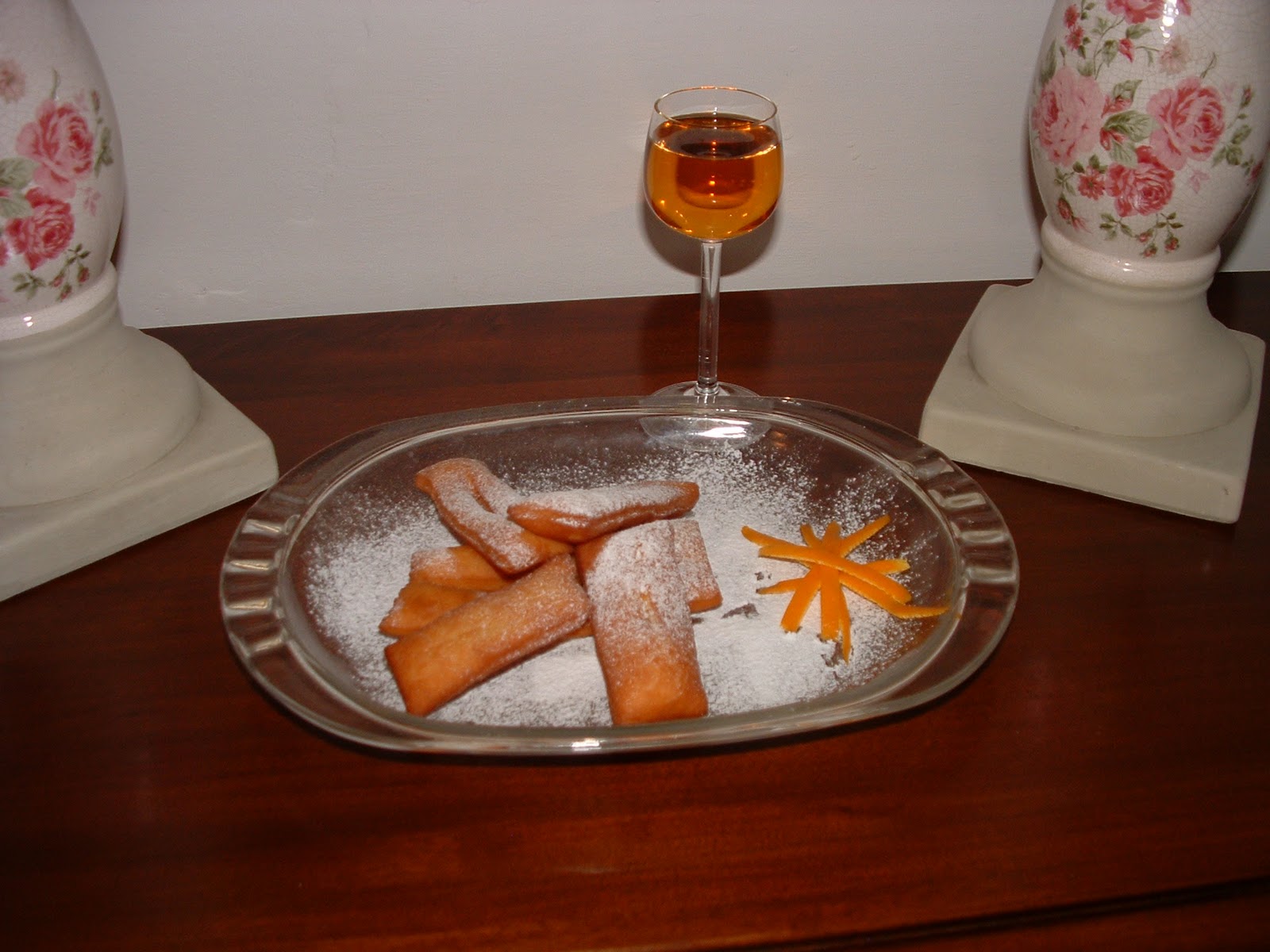
" I CENCI "

Dopo molto tempo sono tornato a pubblicare qualche nuova ( si fa per dire ) ricetta, questo fermo è stato causato da inconvenienti tecnici e sopratutto dallo scazzo che mi aveva assalito, ora penso di aver ritrovato perlomeno l'ispirazione per poter cimentarmi in cucina.
Abbandoniamo le confessione e passiamo a spiegare sia l'origine del nome che la preparazione (cosa non di poco conto) dei CENCI.

I CENCI che in toscano significa panni - stracci prendono tale nome appunto perché sono fatti da una sfoglia tagliata a strisce irregolari che ricorda gli stracci di stoffa logora ( le strisce di stoffa sono dette anche cintoli o al singolare cintolo che venivano usate come legature proprio perché in una realtà povera non si butta via niente).

La ricetta è molto semplice per fare una buona quantità di cenci serve:

Farina 250 g farina 00
Burro 25 g
Zucchero 30 g
Un cucchiaio da minestra di Vin Santo
Uova 2
La scorza di un arancia o limone ( facoltativa )
Una bustina di lievito (circa 16g facoltativo)
Un pizzico di sale
Circa 500cc di olio di semi
Zucchero a velo ( facoltativo)

Come prima cosa andiamo a setacciare la farina su di un spianatoia poi facciamo il classico incavo al centro e vi versiamo lo zucchero, il lievito, ( se vogliamo avere dei cenci belli spumosi altrimenti facciamo senza e otterremo un prodotto bello croccante), la scorza di arancia o di limone a seconda del gusto ( o senza se non ci interessa di sentire il retrogusto di agrumi), il Vin Santo ( fatto in casa sarebbe il massimo ), il burro liquefatto ma non bollente, il sale( al bordo della farina e non a contatto con il lievito altrimenti andremo a fermare la fermentazione che si dove innescare) e le uova.

A questo punto con la mano a spatola cominciamo a impastare fino ad ottenere una palla di pasta abbastanza elastica, se il composto dovesse risultare troppo morbido possiamo aggiungere della farina per regolare la consistenza, facciamo riposare in un canovaccio il tutto per circa 30-40 min e poi possiamo tirare la sfoglia.

Utilizzando una rotella o liscia o zigrinata andiamo a tagliare le strisciette di sfoglia che friggeremo in padella con l'olio a circa 200°c, a doratura ottenuta togliamole e mettiamole su della carta assorbente per prosciugarle dall'olio.

Una volta raffreddate cospargeremo con dello zucchero a velo.

Buon appetito a tutti.

After a long time I came back to post some new (so to speak) recipe, this detention was caused by technical problems and especially from the listlessness that had attacked me, now I think I've at least found the inspiration to try my hand in the kitchen.

We leave the denomination and we will now explain the origin of the name that the preparation (which is not trivial) of the Cenci. 

The Cenci in Tuscany means "rags - rags" take that name precisely because they are made from a sheet cut into irregular strips reminiscent of the rags of cloth worn (strips of cloth are also known as the singular waist or belt, which were used as ligatures because in reality a poor do not throw anything away).
 
The recipe is very simple to make a good amount of used rags:
Flour 250 g flour 00 
25 g butter 
30 g sugar 
A tablespoon of Vin Santo (sweet wine) 
2 eggs The rind of one orange or lemon (optional) 
One packet of yeast (about 16 g optional) 
A pinch of salt 
Approximately 500cc of oil seeds 
Powdered sugar (optional)

First, let's sift the flour on a pastry board and make the classic hollow in the center and poured sugar, baking powder, (if we have some nice fluffy rags otherwise do without and we get a nice crispy product), the grated orange or lemon juice according to taste (or without if we are not interested to hear the hint of citrus), Vin Santo (homemade is the best), but not hot melted butter, salt (at the border of the flour and not in contact with the yeast fermentation, otherwise we will stop where you start) and eggs.

At this point we begin with the hand with a spatula to mix until a ball of dough elastic enough, if the compound proves to be too soft, we can add the flour to adjust consistency, let it rest in a cloth for around 30-40 minutes and then we can pull out the dough.

Using a smooth or knurled wheel or let's cut the puff pastry Test Strip frying pan with oil to about 200 ° C, browning obtained withdraw them and let's put on a paper towel to drain oil.
 
When cool sprinkle with icing sugar.
 
Bon appetit to all.

martedì 16 novembre 2010

Cannoli di bresaola ^_^

Anche questa ricetta è semplice semplice ma di sostanza.

La mia idea era quella di fare un antipasto alternativo ai soliti crostini così mi è venuta questa idea e mi sono messo all'opera.

Diciamo che per comodità le dosi per fare circa 12 cannoli ci vuole:
  • 12 fette di bresaola (senza si fa poco ^_^)
  • 110 g di ricotta fresca
  • 50-60 g di noci 
  • 150 ml di panna fresca 
  • 200 g di funghi porcini freschi o surgelati
  • Un mazzetto di erba cipollina 
  • Pepe e sale
La preparazione è semplicissima, in una terrina setacciamo la ricotta e vi versiamo un cucchiaio di panna fresca, in un mortaio pestiamo le noci tritandole finemente (si possono usare anche altri strumenti dedicati allo schiacciamento, i mixer non li consiglio perché tendano a surriscaldare e a far prendere un sapore amaro alle noci NdR), notare che produrranno un olio che è eccezionale al gusto e ci aiuterà, unito alla ricotta, a renderla malleabile, un po' di erba cipollina  tritata finemente un pizzico di sale e pepe.

Mescoliamo il tutto e lasciamo riposare per circa 10-15 min.

Intanto in un pentolino andiamo a mettere i funghi tritati a tocchetti  non troppo piccoli (se freschi un mezzi bicchiere di acqua appena hanno cominciato a prendere la temperatura se surgelati il liquido lo faranno da soli), anche qui un po' di erba cipollina tritata finemente (vedrete che non ci sarà l'appiattimento dei sapori), la panna, sale e pepe quanto basta (quanto mi piace questa espressione!!!). Facciamo andare il tutto a fuoco basso fino a che non si è addensato quanto voluto (se ritira troppo si può aggiungere un po' di latte).


Nel mentre i funghi cuociono  disponiamo su un tagliere le fette di bresaola, sulle quali andremo con l'ausilio di un cucchiaio a mettere la ricotta che si è insaporita nel frattempo (come unita di misura è azzeccata).

Arrotoliamo la fetta di bresaola come fosse un cannolo e con l'ausilio di un filo di erba cipollina leghiamo il tutto (ci vuole delicatezza e pazienza doti che mancano al mio carattere).


Ora andremo ad aggiungere sopra a i nostri cannoli la salsa di panna e funghi che abbiamo preparato in precedenza e otterremo il seguente risultato...


Il piatto è buono sia con la salsa calda (decisamente meglio) che con la salsa fredda questa sarà una vostra scelta.

Se le foto possono rendere l'idea l'unica cosa che mi resta da dirvi è...

provatele e fatemi sapere...

Buon appetito a tutti ^_^


Although this recipe is very simple but of substance.
My idea was to make an alternative to the usual crostini appetizer so I came up with this idea and I started to work.
Let's say for convenience doses to make it takes about 12 cannoli:

    
12 slices of dried beef (not just you ^ _ ^)
    
110 g fresh ricotta
    
50-60 g of walnuts
    
150 ml fresh cream
    
200 g of fresh or frozen porcini mushrooms
    
A bunch of chives
    
Greying
The preparation is simple, in a bowl sift ricotta and poured a spoonful of fresh cream, pounded in a mortar finely chopped walnuts (you can use other tools dedicated to crushing, the mixer can not recommend them because they tend to overheat and to take a bitter taste to walnuts Ed), note that will produce an oil that is exceptional in taste and will help us, together with the ricotta to make it malleable, a little 'spring onions, finely chopped a pinch of salt and pepper.
Mix everything together and let rest for 10-15 min.
Meanwhile in a pot we are going to put the mushrooms chopped into pieces not too small (if it means a fresh glass of water just began to take the temperature of the liquid if it is frozen will do it by yourself), again a bit 'of chives, finely chopped (you will see that there will be the flattening of the flavors), cream, salt and pepper to taste (as I like this expression !!!). We go all over low heat until it has thickened as desired (if you withdraw too much you can add a little 'milk).
Meanwhile cook the mushrooms have on a cutting slices of dried beef, on which we will go with the help of a spoon to put the cottage cheese that is flavored in the meantime (as a unit of measure is judicious).
Roll up the slice of dried beef like a cannoli and with the help of a chive tie it all (it takes patience and delicate skills that are lacking in my character).
Now we will add on to our cannoli cream and mushroom sauce we prepared earlier and obtain the following results ...


The dish is good either hot sauce (much better) than with the cold sauce this will be your choice.

If the photos may make the idea the only thing left for me to tell you is ...


Try it and let me know ..Bon appetit to all ^ _ ^

Sugo alla salsiccia olive aromatizzato al rosmarino

Questo seghetto è espressamente dedicato alle tagliatelle di farina di castagne che ho presentato in un post precedente.

Le dosi per 4 persone possono essere le seguenti:

  1. 6 salsicce 
  2. Un vasetto di olive nere (preferisco quelle snocciolate ma è uguale anche quelle con il nocciolo)
  3. 1 o 2 rametti di rosmarino 
  4. 1 o 2 spicchi di aglio 
  5. circa 4 cucchiai da minestra di olio extra vergine di oliva (poi se non è vergine quello che fanno le olive sono affari loro ^_^ OVVIA).
  6. sale e pepe 
La preparazione è velocissima, in una tazza mettete il rosmarino e l'aglio nelle dosi che preferite, ( cercate di abbondare con il rosmarino altrimenti il sapore sarà misero) con l'ausilio di un pestello o un oggetto simile schiacciate leggermente il tutto, in un pentolino mettete a scaldare l'olio e al momento che è in temperatura (lo potete verificare introducendovi uno stuzzica denti [pulito°.°] se sfrigola va bene) versatelo nella tazza lasciando raffreddare il tutto.
( Mi scuso per non aver fotografato l'infuso di rosmarino che a vedersi era carino P.s. mettete la pentola dell'acqua per la pasta).

Ora prendiamo le salsicce e ci facciamo tanti bocconcini (((parevano boiles per le carpe))), le mettiamo in padella senza olio con le olive scolate del loro liquido, sarà il grasso perso dalle salsicce a legare il tutto. Appena le salsicce saranno leggermente arrosellite copriamo con un coperchio la padella portando il fuoco ad un livello medio basso per qualche minuto ed il sugo è pronto.
Quando la pasta che avete scelto (personalmente lunga) ha circa un minuto a raggiungere la cottura al dente scolatela e agggiungetela alle salsicce mantenendo circa un bicchiere di acqua della sua cottura, saltate il tutto fino a che il liquido non si è guasi del tutto prosciugato a quel punto impiattate e filtrando con un colino l'olio aromatizzato al rosmarino fatto in precedenza cospargete la pasta, servite caldo e buon appetito ^_^.

Questo è quello che ho fatto io Tagliatelle di farina di castagne e sugo precedentemente illustrato.

Ciao e grazie a tutti quelli che mi seguano.


This saw is specifically dedicated to noodles made with chestnut flour that I presented in a previous post.
Doses up to 4 people can be as follows:

    
6 sausages
    
A jar of black olives (I prefer those stoned but also those with the same stone)
    
1 or 2 sprigs of rosemary
    
1 or 2 cloves of garlic
    
about 4 tablespoons of extra virgin olive oil (not virgin then if what they do is their business olives ^ _ ^ of course).
    
salt and pepper
The preparation is very fast in a cup put the rosemary and garlic in a dose of your choice (try to abound with rosemary, otherwise the flavor will be poor) with the aid of a pestle or something similar, slightly crushed all in Put in a saucepan heat oil and when it is in temperature (can be verified by inserting a tease teeth [clean degrees. °] sizzles if it fits) pour into the cup, leaving to cool.
(I apologize for not having photographed the infusion of rosemary was nice to see that Ps put the pot of water for the pasta).
Now let us do so many sausages and diced (((seemed boilies for carp))), we put them in a pan with olive oil-drained of their liquid, you lose the fat from sausages to tie it all together. As soon as the sausages are slightly arrosellite we cover the pan with a lid and bring the heat to a medium low for a few minutes and the sauce is ready.
When the pasta of your choice (long staff) has about one minute to reach the al dente and drain the sausage agggiungetela keeping about a glass of water has been cooked, skip everything until the liquid has completely drained Guaso Serve and then filtering with a strainer oil flavored with rosemary previously done sprinkle the pasta, serve hot and enjoy your meal ^ _ ^.
That's what I did with chestnut flour noodles and sauce described above.
Hello and thank you to all who follow me